Foraging for Goldenrod and Making a Simple Tea
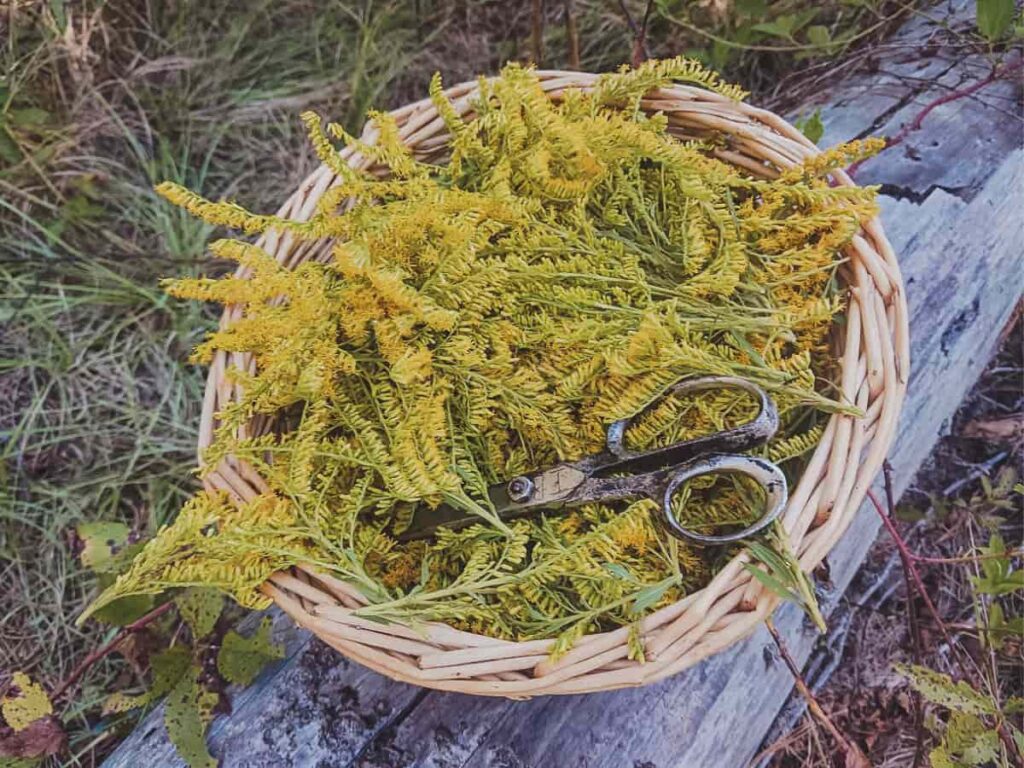
We live in an area of dense forest, or “woods” as we’ve always called it. We get a lot of rain, which means an abundance of vegetation and plenty of opportunities for foraging. In the late summer to early fall, the roadsides and woodlines light up with Goldenrod’s tall stalks of yellow flowers.
Many people mistakenly believe that Goldenrod is the cause of allergies, but actually it’s the blooms of its cousin, Ragweed, that are the true culprit. Goldenrod has been traditionally used as an herbal medicine for seasonal allergies, urinary tract support, skin conditions, cold and flu, and much more. It’s known to have anti-inflammatory, diuretic, antioxidant, and antimicrobial properties. Nature truly provides!
Recently, I grabbed a basket and a pair of scissors and spent some time walking around our property harvesting Goldenrod blooms. I preserved the blooms in three ways: an alcohol tincture, an olive oil infusion and dehydration.
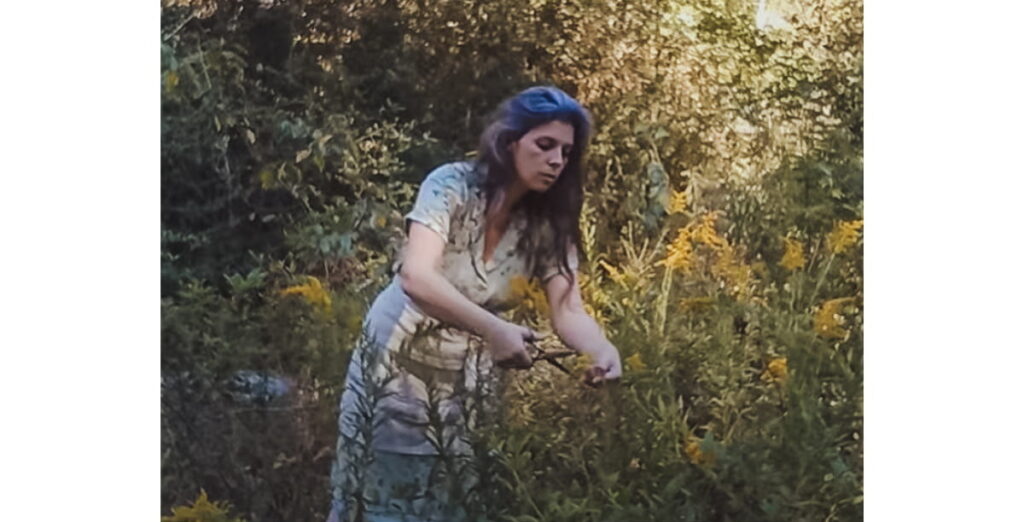
As fall eases into full swing, nature trades our Goldenrod for rust-colored leaves and red yaupon berries. We’ll depend on our stored-away blooms for teas and salves or to use in baking or mixing into salad dressings.
Using dried Goldenrod for tea
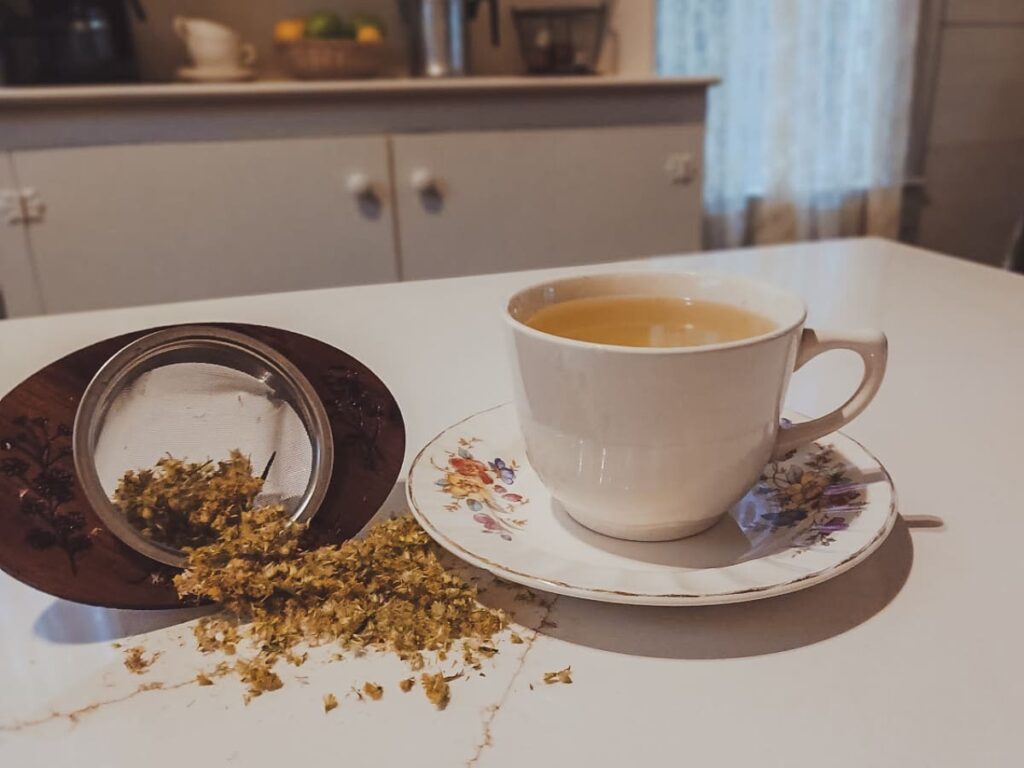
For a simple cup of Goldenrod tea, start by filling a tea ball, or steeper of your choice, with one tablespoon of dried flowers. If fresh blooms are in season, they can be used as well. Place the steeper in your cup and pour hot water over it, allowing it to steep for about 10 minutes. I personally like to cover my cup with a saucer to trap the steam containing the herb’s therapeutic compounds. Goldenrod tea has a fresh, light flavor and is great as is, or you can add honey or lemon to it. It also pairs well with other herbs like mint. Goldenrod tea, known for its strong astringent and anti-inflammatory qualities, is a great option when you start feeling allergy symptoms or the onset of a UTI.
Helpful Resources for Home Remedies and Foraging
- My basic guide to home remedies and my free home remedy ebook can be found here!
- To learn more about herbalism and home apothecary, check out the Learning Herbs site.
- To learn about edible and medicinal plants found in the southern US, visit The Legacy Wilderness Academy.
- For information on edible and medicinal plants specific to Texas, visit Foraging Texas.
- To source herbs that may not be locally or seasonally available to you, check out Mountain Rose Herbs or Bulk Apothecary.
Pin it for later:

Home remedies are not meant to replace modern medicine or professional medical advice. Home remedies can be useful for some conditions, but they may not always be safe or effective for everyone. They are not meant to treat, cure or heal sickness and disease but help to support, maintain and promote good health and wellbeing. A single study or clinical trial may not cover diverse communities or bodies, and what research notes as beneficial may not always work for you. The remedies shared on the site are based on therapeutic usages and although these remedies are generally safe and usually have no side effects, I advise that these be practiced / taken at the user’s sole discretion. Please consult with your physician before incorporating any remedies into your healthcare regimen.
This is a wonderful article! I love goldenrod and wished there was some growing in my area, but I have yet to find it. Ragweed on the other hand is plentiful, which results in intense bouts of seasonal allergies for me. This is such great information! Thank you for sharing.
Thank you! 🙂
Aww..that’s too bad. I’m wishing I would have harvested more than I did. We definitely won’t have enough to last us the year. I hope you can find some next year. It’s odd that you haven’t..it’s usually found in the same area as ragweed.